What If Your Lights Could Keep an Old Promise Alive?
Imagine walking into a home where the glow of a lamp isn’t just light—it’s a message. A quiet signal that someone remembered you. That someone, even miles away, still keeps pace with your days. This isn’t magic. It’s not sci-fi. It’s lighting that understands life’s rhythms—and the quiet power of old friendships. And it might be rekindling a connection you thought time had dimmed. We’ve all had those friendships—the kind that once filled our weekends, our late-night calls, our inside jokes—only to slowly fade not from lack of care, but from the simple truth that life got busy. But what if staying close didn’t require grand gestures? What if it could be as simple as a light turning on at just the right moment?
The Moment We Realized Our Rhythm Was Breaking
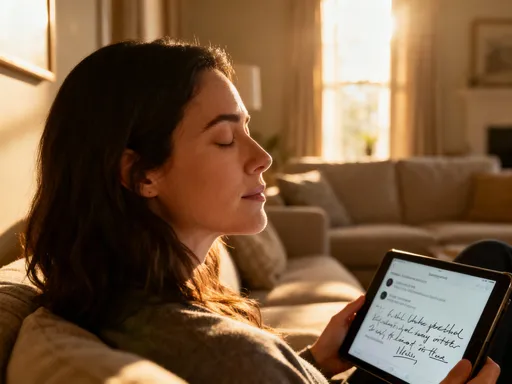
It started with a text that felt heavier than it should have. “I saw your birthday post,” I wrote to my oldest friend, the one I used to call every Sunday without fail. “Wish I hadn’t missed it.” She replied with a heart and a “No worries,” but I knew better. We both did. We’d been drifting—not out of anger or disinterest, but because her mornings were my late nights, her school runs clashed with my work meetings, and our rhythms no longer matched. The calls got shorter. The texts went unanswered for days. And slowly, the warmth of our friendship began to feel like a memory rather than a living thing.
Then, one evening, something changed. I was making dinner, tired, distracted, when I glanced at the small lamp in my living room. It had turned on—soft, warm, just as the sky outside turned deep blue. I didn’t remember setting a timer. But then I realized: she had. Months ago, we’d both installed smart lighting in our homes, mostly for convenience. But on a whim, during one of our rare long calls, we joked about syncing our lights—“Like a digital porch light,” she’d said. We never followed through. Or so I thought. But that night, her light had turned on in her home, and mine, set to mirror it, had followed. And suddenly, I didn’t feel alone. I felt seen. Not because she’d texted or called, but because her presence was woven into the very air of my home. It was subtle. It was silent. And it was everything.
When Lighting Becomes More Than Illumination
We used to think of lights as tools—something to flip on when it got dark, to help us find our keys or read a book. But today’s smart lighting does more than brighten a room. It listens. It learns. It responds. And increasingly, it connects. Modern lighting systems like Philips Hue, Lutron, and others aren’t just about automation—they’re about intention. They allow us to program not just brightness and color, but meaning. A light that turns on when someone arrives home isn’t just a safety feature. It’s a welcome. A lamp that dims at bedtime isn’t just energy-efficient. It’s a lullaby.
And now, these systems are being used in ways their makers might not have imagined—not for convenience, but for connection. Think about the old habit of leaving a porch light on for someone coming home late. It said, “I’m awake. I’m waiting. You’re safe here.” Today, that same gesture can span continents. You can set your living room lamp to glow at the same time your sister in another time zone settles in for tea. You can program a hallway light to brighten when your college roommate starts her morning walk. No words. No pressure. Just presence.
What makes this different from a text or a video call is the lack of demand. A message waits for a reply. A call expects attention. But a light? A light simply is. It doesn’t ask anything of you. It just says, “I’m here.” And in a world where we’re constantly expected to respond, that quiet consistency can be more powerful than any conversation.
The Science of Feeling Close Without Saying a Word
Human connection has always relied on more than words. Think about the comfort of hearing a loved one’s footsteps in the next room, or the way a shared routine—like making coffee at the same time every morning—can make you feel close even when apart. Psychologists call these “ambient awareness” cues—small, passive signals that help us feel connected without active communication. And they matter more than we realize.
Studies in social psychology show that predictable, low-effort signals of presence reduce feelings of isolation and increase emotional security. For example, research from the University of Michigan found that people in long-distance relationships who shared daily routines—even simple ones like eating breakfast at the same time—reported higher levels of intimacy and lower stress. The brain doesn’t need grand gestures to feel safe. It just needs to know that someone is still in sync with your life.
This is where smart lighting comes in. When a light turns on automatically during a friend’s evening walk, it’s not just a technical trick. It’s a digital echo of those old, analog habits—like leaving a light on in the hallway, or keeping a window lit so someone could see it from the street. The color, the timing, the warmth of the glow—all of it can be calibrated to mirror a shared rhythm. And when that rhythm is maintained, something subtle but profound happens: loneliness fades, not because the distance is gone, but because the silence feels less empty.
How Two Lives Synced Through Simple Signals
Let me tell you about Sarah and Maria. Sarah lives in Chicago. Maria lives in Portland. They were college roommates, inseparable for four years, then scattered by jobs, marriages, and kids. For years, they tried to stay close—monthly calls, birthday cards, the occasional visit. But as their children grew, so did the gap. The calls got shorter. The visits rarer. They still cared, deeply. But life, as it does, pulled them in different directions.
Then, last winter, Sarah mentioned she’d started using smart lights to help her wind down at night. Maria, always the tech-curious one, asked how they worked. They got to talking—really talking—for the first time in months. And somewhere in that conversation, Maria said, “What if we set our lights to match? Like, when I turn mine on for my evening tea, yours does too?” Sarah laughed. “That’s kind of sweet,” she said. “Let’s try it.”
It took less than ten minutes to set up. They both used Philips Hue, so they created a shared routine: every evening at 7:30, Maria’s living room lamp would turn on in a warm amber. At the same time, Sarah’s would do the same. No app notifications. No messages. Just light. And slowly, something shifted. Sarah began looking forward to that moment. It wasn’t just a reminder that Maria was awake—it was a reminder that she was remembered. On nights when Maria forgot to set it, Sarah noticed. Not with anger, but with a quiet ache. The light had become a ritual. A promise.
They expanded it. A soft blue glow at 9:00 p.m. meant, “I’m thinking of you tonight.” A brighter, cooler light at 8:00 a.m. said, “Good morning. Hope your day is kind.” They never talked about it much. But they both knew. And that was enough.
Building Emotional Routines in a Digital Age
We live in a world of constant connection—and yet, so many of us feel more alone than ever. Texts pile up. Social media feeds scroll endlessly. Video calls leave us drained. We’re communicating more than ever, but the quality of connection often feels thin. We’re missing the small, quiet moments that used to hold relationships together—the shared silence, the familiar routines, the unspoken understanding.
But what if technology could help us rebuild those moments—not by adding more noise, but by creating space for stillness? Smart lighting offers a rare kind of digital ritual: one that asks nothing of us, yet gives so much. It doesn’t require typing. It doesn’t demand attention. It simply exists, like a heartbeat in the background of our lives.
And the best part? It’s easy to start. You don’t need to be a tech expert. You don’t need to spend hours setting it up. If you and a friend both have smart lights—whether it’s Philips Hue, Lutron, or another common system—you can create a shared lighting routine in minutes. Pick a time that matters: maybe when you both get home from work, or when you start dinner, or when you wind down for bed. Choose a color that feels right—warm for comfort, soft blue for calm, bright white for energy. Then, program it. That’s it.
The key isn’t the technology. It’s the intention behind it. This isn’t about efficiency. It’s about meaning. It’s about saying, “Even though I can’t be there, I’m still part of your day.” And over time, that small act becomes a habit—a quiet thread that weaves through your lives, stronger than any text message.
Beyond Safety: Lighting as Emotional Architecture
We often talk about smart homes in terms of security—motion sensors, doorbells with cameras, lights that turn on when someone approaches. And yes, those features matter. But there’s another kind of safety that smart lighting can provide: emotional safety. For someone living alone, especially after loss or during a lonely season, a home can feel too quiet, too empty. But a light that turns on at a familiar time—because a friend, a child, a sibling is mirroring their routine—can make that silence feel less heavy.
Lighting affects our mood in measurable ways. Research from the Lighting Research Center at Rensselaer Polytechnic Institute shows that warm, dim lighting in the evening supports melatonin production and helps with relaxation. Cooler, brighter light in the morning can boost alertness. But beyond biology, there’s psychology. A light that turns on automatically, not because a sensor detected motion, but because someone chose it for you—that’s care made visible.
Think of it as emotional architecture—the way we design our environments to support not just our bodies, but our hearts. A well-lit staircase keeps us from tripping. A thoughtfully lit evening keeps us from feeling forgotten. And when that light is shared with someone far away, it becomes a bridge. Not a loud one. Not a flashy one. But a steady one, built not of steel or stone, but of warmth and timing and memory.
A New Kind of Keepsake: Light as Living Memory
Somewhere along the way, that evening glow became more than a signal. It became a story. Sarah told her daughter, “That light means Aunt Maria’s thinking of us.” Maria’s husband noticed the blue light at night and started saying, “Looks like Sarah’s sending love tonight.” The ritual had taken on a life of its own. It wasn’t just about staying in touch. It was about keeping a friendship alive in a new form—quiet, consistent, and deeply meaningful.
And then, one night, Maria forgot to set the routine. Her lamp didn’t turn on. But Sarah’s did. Because Sarah had set it to go on automatically, every night, whether Maria remembered or not. “It’s not about the sync,” she later said. “It’s about the promise. I’ll be here, even if you forget.”
That’s the power of this simple act. It’s not about perfect timing or flawless tech. It’s about showing up. Again and again. In the softest way possible. A light doesn’t shout. It doesn’t demand. It just glows. And in that glow, we find something rare in our noisy world: a quiet assurance that we are not forgotten.
So here’s my invitation to you. Think of someone you’ve lost touch with—not because you wanted to, but because life got in the way. Maybe it’s an old friend. A sibling. A cousin. Someone whose rhythm once matched yours. And ask yourself: what if you could sync your light with theirs? Not to fix everything. Not to force a conversation. But to say, in the gentlest way, “I still remember your rhythm. I still honor our time. I’m still here.”
Because sometimes, the most powerful messages aren’t spoken. They’re lit. And sometimes, the softest light carries the loudest message: You matter. I remember. I’m here.