From Forgotten Moments to Lasting Legacy: How a Simple App Transformed Our Family’s Story
You know those little moments—your child’s first joke, your mom’s secret recipe, your dad’s funny saying—that somehow slip away? We used to lose them too. But now, we capture them in seconds. Not with complicated tech, but with a simple shared space where memories grow. It’s not about saving data. It’s about keeping love alive. And quietly, it’s changed how we connect, remember, and even think. This isn’t about flashy gadgets or mastering complex tools. It’s about something softer, deeper—the way we hold onto each other in a world that keeps moving.
The Quiet Disappearance of Family Memories
Think about the last time someone in your family told a story that made everyone laugh—the one where your uncle got lost on a road trip, or your grandmother described how she baked bread during the storm with no power. You remember the feeling, don’t you? The warmth, the way everyone leaned in. But do you remember the exact words? The tone of voice? The little pause before the punchline? Chances are, those details have already started to fade. And that’s not your fault. It’s just how memory works—fragile, fleeting, and easily crowded out by the rush of daily life.
We don’t mean to let these moments go. We truly don’t. But life gets loud. Between school pickups, grocery runs, and late-night work emails, who has time to write down every sweet, silly, or surprising thing that happens? Photos pile up in phone albums, unsorted and unseen. Voice messages disappear after a few days. Recipes scribbled on sticky notes? Lost in a kitchen drawer. And the stories—the ones passed down orally from generation to generation—start to thin out. A grandparent retires, then slows down. A parent gets busy. A child grows up and forgets to ask. Before we know it, whole chapters of our family’s story are gone.
What’s even harder is realizing that it’s not just the big events we lose. It’s the in-between times. The way your mom hums when she stirs soup. The phrase your dad always says when he walks in the door. The nickname your sister gave you when you were five. These aren’t just quirks—they’re threads in the fabric of who we are. When they vanish, we don’t just lose memories. We lose pieces of our identity. And the older we get, the more we feel that absence—not as a loud regret, but as a quiet ache, like a missing photo in an old album.
Traditional ways of preserving memories just aren’t keeping up. Photo albums are beautiful, but they’re static. You can’t hear the laughter behind the smiles. Scrapbooks take hours to make and often end up in storage. Even digital folders on a computer can feel disconnected—buried under work files and old downloads. We need something that moves with us, something that fits into real life instead of demanding extra effort. We need a way to remember that doesn’t feel like a chore.
Enter the Family Note App: A Digital Home for Shared Moments
Imagine a place where every member of your family—your teenager, your aging parents, your young kids—can share a moment, anytime, from anywhere. No pressure. No performance. Just a quiet corner of the digital world where your family’s story can live and grow. That’s what a family note app offers. It’s not another social media platform. It’s not about likes or followers. It’s a private, safe space—like a digital kitchen table—where everyone can add their voice, their memories, their little pieces of home.
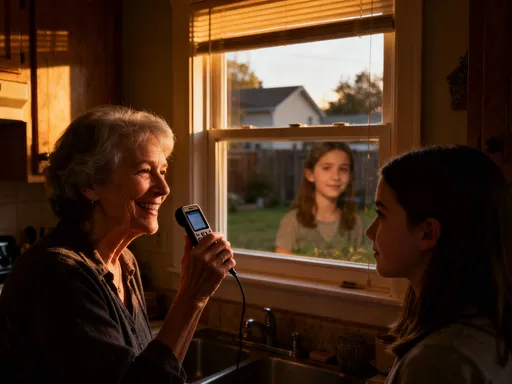
Let me tell you how it started for us. My youngest daughter once asked, ‘Did Grandma sing to you when you were little?’ I paused. I knew the answer was yes, but I couldn’t remember the songs. That night, I called my mom and asked her to sing one into her phone. She did—shyly, laughing at herself—and sent it over. That 30-second voice note? It became one of our most treasured things. And it made me realize: what if we had a place to collect these moments, not just when we thought of them, but as they happened?
That’s when we found the app. It wasn’t flashy. No bright colors or complicated menus. Just a clean, calm space where you could add a note—text, photo, voice, or video—with a few taps. We created a shared family account, invited everyone, and gave it a name: ‘The Johnson Memory Jar.’ Simple. Warm. Ours. My sister started it by uploading a photo of our dad teaching us to ride bikes, with a caption: ‘He ran beside me the whole time, even when I thought I was doing it alone.’ My teenage nephew recorded a voice memo of our grandma’s famous chicken soup recipe, just the way she says it: ‘A pinch of this, a handful of that—taste as you go.’
What surprised me most was how natural it felt. No one had to be convinced. No one felt awkward. It wasn’t about showing off. It was about belonging. The app didn’t replace our family dinners or holiday calls. It deepened them. Because now, when we gather, we have something to return to—something real, something shared. It’s not technology for technology’s sake. It’s tech that serves the heart. And in a world full of noise, that kind of quiet connection is priceless.
How It Works: Effortless Capture, Lasting Impact
You might be thinking, ‘But I’m not tech-savvy. My parents barely use email. My kids hate anything that feels like homework.’ I get it. That was us too. The beauty of this kind of app is that it’s built for real life—not for experts, but for people who just want to stay close. You don’t need to read a manual. You don’t need to learn new skills. If you can tap a screen, you can use it.
Here’s how it works in practice. Let’s say your mom calls and tells a story about her first job at a bakery. Instead of just smiling and saying, ‘That’s nice, Mom,’ she can open the app and record it right then and there. Just one tap. The app saves it automatically. Later, your daughter might stumble on it while scrolling and say, ‘Grandma was a baker? I had no idea!’ And suddenly, a memory becomes a conversation. Or imagine your son wins a school award. You take a photo, add a quick caption—‘Proud of you, sweetie!’—and it’s instantly saved in your family space. No more lost texts. No more forgotten screenshots.
The app works across phones, tablets, even some smart displays, so whether someone prefers typing, speaking, or sharing photos, they can do it their way. And everything is backed up securely in the cloud. No more ‘I lost my phone and all the pictures with it’ heartbreak. Privacy is built in—only invited family members can see or add to the space. No ads. No data mining. Just your family, your moments, your way.
What makes it stick is how little effort it takes. You don’t have to set aside time. You don’t have to plan. You just capture as life happens. That offhand comment from your dad? The way your daughter giggles at a silly commercial? The recipe your sister finally wrote down after years of ‘I just wing it’? All of it matters. And now, all of it stays. Over time, these small acts of saving become something much bigger—a living archive of who you are, built not in a single grand gesture, but in hundreds of tiny, loving ones.
Beyond Preservation: Sparking Creativity Across Generations
Here’s something I didn’t expect: saving memories doesn’t just keep the past alive—it helps create the future. When my kids started exploring the app, they didn’t just read or listen. They reacted. My 12-year-old found a voice note of her great-grandmother describing how she made soap during wartime. ‘She used bacon grease?’ my daughter said, wide-eyed. A few days later, she came to me with a handmade booklet: ‘DIY Soap: Old School vs. Now.’ She’d tried making a small batch with olive oil and lavender, documenting each step in her own voice. It became a school project, yes—but more than that, it became a bridge.
That’s the magic. When younger generations see, hear, and feel the past, they don’t just absorb it—they remix it. My nephew, who’s always drawing, started creating comic strips based on family stories he found in the app. One was about my uncle getting locked out of the house in his pajamas. Another showed my mom’s first car—a bright yellow hatchback she called ‘The Banana.’ He shared them in the app, and suddenly, the stories came alive in a whole new way. My mom cried when she saw the drawing of her car. ‘You remembered the dents,’ she said. ‘You even drew the sticker on the bumper.’
This isn’t about forcing kids to ‘appreciate their roots.’ It’s about giving them raw material to play with, to learn from, to build on. And it works both ways. When teens and kids add their own content, older family members feel connected in a language they understand—love, shared experience, creativity. My father-in-law, who was skeptical at first, now regularly watches his granddaughter’s video notes of her school plays and says, ‘She’s got stage presence. Just like her great-aunt Mabel.’
The app becomes more than a storage space. It becomes a shared creative canvas—a place where tradition and innovation dance together. No one has to lead. No one has to assign roles. It just happens, naturally, because the stories are there, waiting to be discovered, reimagined, and passed on.
Strengthening Bonds Without Forcing Connection
We’ve all been there—family gatherings where someone says, ‘So, how’s school?’ or ‘How’s work?’ and the conversation stalls. We want to connect, but it feels awkward, forced. The beauty of the family note app is that it removes the pressure. Connection happens not because we schedule it, but because we stumble into it.
Take my sister and her daughter. They love each other deeply, but as a teen, my niece often shut down during direct talks. Then one day, my sister shared a memory in the app: a photo of herself at 16, standing next to her first car, captioned: ‘Nervous as anything. Drove two blocks and called Mom to say I made it.’ My niece saw it, listened to the voice note that came with it, and quietly added her own: ‘I got my permit today. I’m scared too.’ No big announcement. No heart-to-heart. Just a simple note. But my sister told me she cried when she read it. ‘It was the first time she’d opened up in months,’ she said.
That’s the power of low-pressure sharing. The app isn’t a stage. It’s a listening space. Grandparents can share without worrying about being ‘boring.’ Teens can respond when they’re ready, in their own words. Busy parents can catch up at midnight, after the kids are asleep. There’s no expectation to reply instantly. No fear of judgment. Just the quiet comfort of knowing your words landed somewhere safe.
Over time, these small exchanges build trust. We start to see each other more clearly—not just as mom, daughter, aunt, or grandson, but as people with fears, dreams, and memories of our own. And when real-life conversations do happen, they’re richer because we’re already connected, even if we didn’t realize it.
Building Emotional Intelligence Through Shared Reflection
One of the most unexpected gifts of using the app has been how it’s helped us understand each other on a deeper level. At first, we used it mostly for fun—silly moments, milestones, recipes. But over time, we started noticing patterns. We began to see how certain stories made us laugh every single time. How others brought up feelings of pride, sadness, or resilience.
My son once listened to a series of notes from his grandpa about working long hours to buy their first home. Later, he said to me, ‘I didn’t know Grandpa worked three jobs. I thought he just… had things.’ That moment sparked a conversation about sacrifice, patience, and what it means to build a life. It wasn’t a lecture. It was a realization, born from hearing a story in his grandfather’s own voice.
For parents, it works the other way too. When I read my daughter’s note about feeling nervous before a school play, I didn’t just see a performance. I saw her courage. And when I replied with a memory of my own stage fright at her age, she looked at me differently. ‘You were scared too?’ she said. ‘I thought you were always brave.’ That small exchange shifted something between us. She saw me as human. I saw her as stronger than I knew.
That’s emotional intelligence in action—learning to recognize, understand, and respond to feelings, both our own and others’. The app doesn’t teach this directly. But by preserving moments of vulnerability, joy, and struggle, it gives us the raw material to reflect, empathize, and grow. Over time, families start to see themselves not just as a group of people under one roof, but as a living story—full of twists, lessons, and love.
A Legacy That Grows With You: Why This Isn’t Just for Now
The most beautiful thing about this shared space is that it doesn’t end with us. It’s not a scrapbook that gathers dust. It’s a living, breathing legacy—one that grows with every new voice, every added memory. When our first grandchild was born, we created a new section just for her. Now, her parents add her first words, her favorite songs, her funny mispronunciations. One day, she’ll be able to scroll back and hear her baby self saying ‘baf’ for bath, or see her dad dancing with her in the kitchen.
And when she has children of her own, she can share these moments with them. She won’t have to rely on secondhand stories or faded photos. She’ll have the real thing—voices, laughter, the texture of everyday love. This isn’t about creating a perfect record. It’s about capturing the real, messy, beautiful truth of family life. The missed notes in lullabies. The burnt cookies. The jokes that only make sense to you. These are the things that make a family a family.
In a world that moves too fast, where attention is scattered and time feels scarce, this quiet act of saving—of saying, ‘This mattered. You matter’—is revolutionary. It’s not about technology. It’s about intention. It’s about love made visible, audible, lasting. And the best part? It’s not reserved for the tech-savvy or the wealthy. It’s available to anyone who wants to hold onto what matters most.
So the next time your child says something funny, or your parent shares a story from the past, don’t just smile and move on. Tap the screen. Save it. Let it live somewhere safe. Because one day, that small moment might be the one someone holds onto when they need to remember who they are—and whose they are. That’s not just memory keeping. That’s love, lasting.