From Screen Silence to Shared Stories: How Tech Reconnected My Family
Imagine this: you’re sitting across from your parents or grandparents, eager to connect—but the only thing between you is the glow of silent screens. We’ve all been there. What if the same devices that distract us could instead help us bond, learn, and grow together? It’s not magic; it’s mindset. With simple, everyday tech, we’ve turned isolation into intimacy, confusion into connection—and in the process, everyone, young and old, started learning in ways we never expected. This isn’t about high-speed downloads or the latest gadgets. It’s about heart, intention, and the quiet moments when a video call brings laughter to a quiet kitchen, or a shared photo album sparks a long-forgotten story. This is how our family found each other again—right in the middle of the digital age.
The Distance in the Same Room
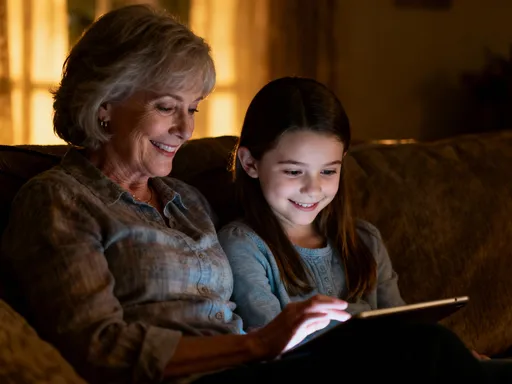
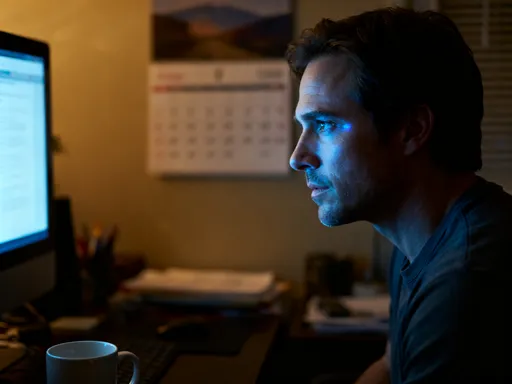
It started with a feeling I couldn’t quite name. We were all home—really home—feet under the same table, voices in the same kitchen. But something was missing. My teenage daughter was scrolling through her phone, my husband was checking emails, and my mother, visiting for the weekend, sat quietly in her armchair, hands folded, watching us all like we were characters in a show she didn’t understand. I remember asking, “Mom, do you want to see what Lily drew at school today?” She smiled and nodded, but when I handed her my tablet, her fingers hovered over the screen like it might shock her. “I don’t want to break it,” she said softly. That moment hit me like a quiet thunderclap. We were surrounded by tools meant to connect us, yet we were more disconnected than ever.
It wasn’t anyone’s fault. My mom grew up without computers. My daughter can’t remember life before smartphones. And me? I’m somewhere in the middle, trying to keep up, trying to translate. But over time, the silence between us grew heavier. Stories went untold. Traditions faded. Jokes weren’t shared. And the worst part? We didn’t even realize what we were losing. We thought we were being productive, entertained, informed. But really, we were just passing time in the same space, missing each other.
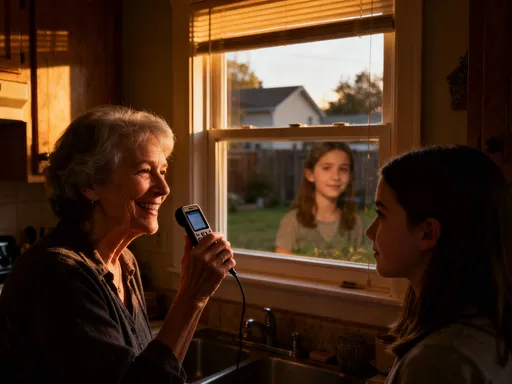
Then one evening, I watched my daughter record a silly voice note for her cousin—just her singing off-key with the dog barking in the background. She sent it with a giggle and didn’t think twice. But my mom heard it and laughed—really laughed—for the first time in days. “I can hear the dog!” she said, delighted. “It’s like they’re right here.” That’s when it clicked: maybe the problem wasn’t the technology. Maybe it was how we were using it. What if, instead of letting screens divide us, we used them to bring us closer? Not as distractions, but as bridges. That night, I made a quiet promise to myself: we were going to learn how to use tech—together.
Small Tech, Big Conversations
We started small. No grand plans, no tech overhaul. Just one simple idea: let’s use our devices to share moments, not just consume them. I created a shared photo album on a cloud service—nothing fancy, just a space where anyone in the family could add pictures. At first, it was mostly me and my daughter uploading school events and weekend walks. But then, one morning, I got a notification: my mom had added a photo. It was a scanned picture of my father as a boy, standing in front of an old car I’d never seen. I called her right away. “Where was this taken?” I asked. “Oh, that was in front of your granddad’s garage,” she said. “He used to fix cars on weekends. Your dad loved helping him.” That one photo sparked a 45-minute conversation I’d never had before.
From there, we began experimenting. We sent voice notes instead of texts. I’d record myself reading bedtime stories for my niece, and my mom started sending little voice messages—just her saying good morning or sharing a recipe. “Here’s how I make the apple pie you liked,” she’d say, her voice warm and steady. My daughter started calling them “Grandma’s audio hugs.” We didn’t need perfect audio or fancy editing. We just needed presence. And something amazing happened: the more we shared, the more curious we became. My mom started asking, “How do I send a video?” My nephew asked, “Grandpa, what was school like when you were little?” The questions flowed naturally because the connection was real.
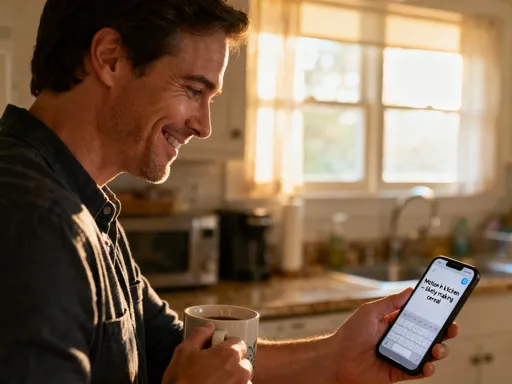
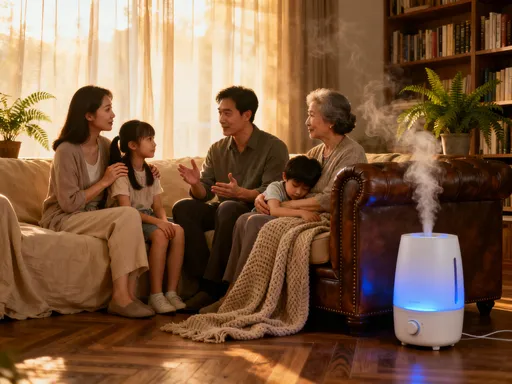
Video calls became our new Sunday ritual. No agenda, no pressure. Sometimes we’d just eat lunch “together” while the camera rolled. Other times, we’d show each other what we were doing—my mom tending her garden, my daughter painting in her room. The screen wasn’t a wall anymore; it was a window. And the best part? These weren’t one-way interactions. They were exchanges. My mom learned how to take screenshots. My daughter learned about life before Google. We weren’t just sharing tech—we were sharing lives.
Learning as a Family, Not by Default
Here’s something I didn’t expect: teaching became the most powerful form of bonding. We stopped seeing tech as something the young had to “fix” for the old. Instead, we made learning a two-way street. One afternoon, my son couldn’t figure out why his tablet kept freezing. I didn’t know either, so I asked my dad—someone who’d worked in electronics for decades. He walked us through checking the storage, closing unused apps, restarting the device. It took 10 minutes, but by the end, my son looked at him and said, “Grandpa, you’re like a tech wizard.” My dad just chuckled. “Son, this is just common sense with wires.”
That moment sparked a new routine. We started scheduling “tech tea times”—just an hour on Saturday where anyone could bring a question. No judgment, no rushing. My daughter taught my mom how to use emojis. In return, my mom told stories about writing letters by hand and waiting weeks for a reply. My husband learned how to use a fitness tracker from my niece, who’d been using one for her school steps challenge. He joked, “I’m being coached by a 12-year-old.” But he meant it with love.
What made these moments special wasn’t the tech itself—it was the patience, the eye contact, the shared focus. We weren’t just learning how to use a device. We were learning how to listen, how to be present, how to value each other’s knowledge. The teenager who once rolled her eyes at “old people questions” now says, “Wait, Grandma, tell me more.” The grandparent who once felt left behind now says, “Let me show you something I learned.” That shift—from frustration to curiosity, from isolation to inclusion—was worth more than any tutorial.
Turning Memories into Meaning
One weekend, I found a shoebox in my mom’s closet filled with old photos, postcards, and handwritten letters. Some were from my grandparents’ wedding. Others were notes from my dad when he was stationed overseas. I sat on the floor for hours, just looking. Then I thought: what if we didn’t just preserve these—we shared them? So we started a family project: digitizing our history. We used a simple scanner app on my phone and uploaded everything to a shared folder. No fancy equipment, no expensive software. Just time, care, and a few extra charging cables.
The first time my daughter saw a black-and-white photo of my dad in uniform, she said, “He looks so young.” I told her about the letter he wrote from Germany, how he missed his mom’s cooking. Later, we found an old audio cassette of my grandmother singing a lullaby. We converted it to a digital file, and now my nephew plays it when he can’t sleep. “It sounds like history,” he said. “But also like home.”
These aren’t just files in the cloud. They’re conversation starters. They’re emotional anchors. When my son was nervous about starting middle school, I showed him a letter my dad wrote when he was the same age—full of advice, jokes, and reassurance. “You’re not the first kid to feel this way,” I told him. He read it quietly, then said, “I guess some things don’t change.” That moment wasn’t about technology. It was about continuity. Tech just gave us a way to pass it on.
Daily Routines, Reinvented Together
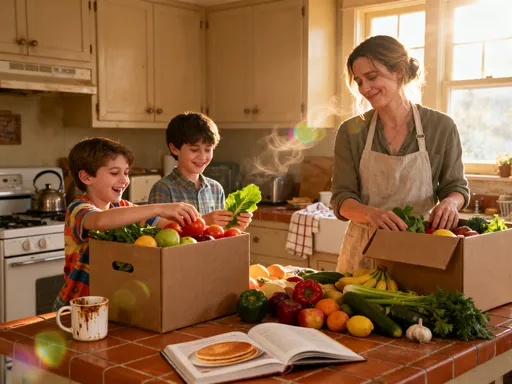
We didn’t stop at memories. We started using tech to simplify the everyday—the things that used to cause stress and miscommunication. Meal planning used to be a guessing game. Now, we have a shared calendar where everyone adds what they’d like to eat. My mom puts in her favorite soup recipe on Wednesdays. My daughter adds “taco night” with a little emoji. We get alerts, make grocery lists together, and even share photos of the final dish. It’s not about perfection—it’s about participation.
Holiday planning used to mean endless texts and missed calls. Now, we have a family group chat where we vote on dates, share travel updates, and post decorations as we set them up. Last Christmas, my cousin live-streamed her tree lighting from two states away. We all watched together, sipping cocoa, shouting “Turn the lights on!” through the screen. It wasn’t the same as being there—but it was close. And for that year, it was enough.
Even health routines became easier. My mom takes several medications, and we were always worried she’d miss a dose. So we set up a simple reminder app on her phone, and she gets a gentle alert every morning and evening. My daughter added a little voice note: “Love you, Grandma. Don’t forget your pills!” Now, my mom says, “I don’t just take them because I have to. I take them because someone cares.” That’s the thing—we weren’t just organizing schedules. We were reinforcing love. Tech handled the logistics, so we could focus on the feelings.
The Quiet Confidence That Grew
One day, I got a text. It was from my mom. But it wasn’t just words. It was a meme—a silly picture of a cat wearing glasses, with the caption “When you finally figure out how to send photos.” I laughed out loud. This was the woman who once refused to touch a tablet. Now, she was sending memes. And not just any memes—ones she found herself, saved, and sent with pride. That moment told me everything: she wasn’t just using tech. She was enjoying it.
Confidence grew in small steps. My husband, who used to hand his phone to the kids whenever it acted up, now troubleshoots on his own. My niece, who once thought older adults “just didn’t get it,” now says, “My grandma texts me every day. She’s kind of cool.” The shift wasn’t just in skills—it was in identity. People who once felt outdated now feel included. Those who feared being a burden now feel capable. And that sense of worth? It spills over into everything—how they speak, how they engage, how they show up in the family.
I’ll never forget the day my dad started a video call—on his own. No help, no prompting. He just tapped the button and said, “I wanted to show you the roses.” We spent 20 minutes watching him walk through the garden, pointing out blooms, sharing stories about which ones my mom used to love. It wasn’t a big moment in the world’s eyes. But in ours? It was everything. Because it wasn’t just a video call. It was a declaration: “I’m here. I’m part of this. I matter.”
A Future Built on Shared Growth
This journey didn’t end with a perfect system or a flawless family. It’s ongoing. We still have moments of frustration. Devices die at the wrong time. Apps update and confuse us all over again. But the difference now is mindset. We don’t see tech as the enemy. We see it as a tool—one that, when used with love and intention, can deepen our bonds instead of distracting from them.
We’re not waiting for the next big innovation. We’re making the most of what we already have. A phone. A tablet. A simple app. These aren’t just gadgets. They’re gateways—to stories, to laughter, to legacy. The real magic isn’t in the technology itself. It’s in what happens when we press play, when we hit send, when we say, “Let me show you something.”
What started as a way to fix disconnection became something much bigger: a family culture of curiosity, patience, and mutual respect. We’re not just sharing screens. We’re sharing lives. And in a world that often feels too fast, too loud, too divided, that’s the greatest gift of all. So if you’re sitting across from someone you love, and the silence feels heavy, try this: don’t put the phone away. Use it—to say hi, to share a memory, to start a conversation. Because sometimes, the very thing that seems to separate us can, with a little heart, become the bridge that brings us back together.