What If Your Home Could Help You Communicate Better—Just by Feeling Right?
Have you ever noticed how tense conversations happen more often when the air feels dry or stale? I didn’t either—until I started paying attention. After installing a smart humidification system in my home, I expected softer skin and quieter nights. But what I didn’t expect was how much more calm and connected my family felt. The air we breathe shapes more than our comfort—it shapes our moods, our patience, and even how we talk to each other. This is the quiet change that made our home feel more like us.
The Air That Changed Everything
It started with something small—so small it almost wasn’t worth remembering. My partner left the kitchen counter messy after breakfast. Again. And instead of letting it go, I snapped. Not loudly, not cruelly, but with a sharpness that surprised us both. We both paused, looked at each other, and in that silence, I felt something shift—not just between us, but in the room. It was heavy. Stale. The kind of air that makes your nose twitch and your skin tighten. Later that night, I couldn’t sleep. My throat was dry, my eyes itchy. I kept thinking about the argument. Was it really about the counter? Or was it about how we both felt—off, irritable, like the house itself was pressing down on us?
That’s when I started wondering: could the air in our home be affecting how we talk to each other? It sounded a little out there at first—like blaming the weather for a bad mood. But the more I looked into it, the more sense it made. I read about how indoor air quality impacts everything from concentration to emotional regulation. And humidity—something I’d only ever thought about in winter when my skin cracked—was quietly shaping how we showed up in our home. I realized I wasn’t just looking for comfort. I was looking for peace. And maybe, just maybe, it started with the air.
How Dry Air Silences Us Without a Word
We don’t always notice when the air is dry. It’s not like a broken pipe or a flickering light—there’s no alarm, no obvious sign. But our bodies feel it. Dry air pulls moisture from our skin, our eyes, our throats. It makes us cough at night, wake up with that gritty feeling behind our eyelids, reach for water before we’ve even sat up. And when we’re physically uncomfortable, even a little, it changes how we interact. Have you ever tried to have a deep conversation when you’re distracted by a headache? Or when your nose won’t stop running? It’s hard to listen. Harder to be patient.
Science backs this up. Studies have shown that low humidity levels—especially below 40%—can increase irritability and reduce our ability to focus. When our bodies are under subtle stress, our brains go into low-level survival mode. We’re less open, less empathetic, more reactive. We don’t snap because we’re bad people—we snap because we’re uncomfortable, and we don’t even realize it. One research review from the Harvard T.H. Chan School of Public Health found that indoor environmental quality, including humidity and air circulation, significantly affects cognitive performance. That means not just how well we think, but how clearly we communicate, how well we resolve conflict, how present we feel in a room full of people we love.
Think about the last time you had a tense moment at home. Was the air stuffy? Was someone coughing? Were the lights too bright, the room too warm? We often blame the moment, the person, the timing—but what if the environment was the real culprit? What if we’ve been carrying the weight of unbalanced air without even knowing it? That realization hit me like a quiet thunderclap: maybe our home wasn’t failing us. Maybe it just needed to breathe.
Meeting the System That Listens Before You Do
I wasn’t looking for a high-tech solution. Honestly, I was skeptical. I’ve tried gadgets before—smart lights, voice assistants, even a robot vacuum that kept getting stuck under the couch. But a smart humidifier? That felt different. This wasn’t about convenience. It was about care. So when I finally ordered one, I didn’t expect much. I opened the box on a quiet Sunday afternoon, the kids building Legos at the table, my partner flipping through the mail. The device was simple—sleek, quiet, unobtrusive. I filled the tank, placed it in the living room where we spend most of our time, and connected it to my phone through the app.
That night, I watched the numbers change. The humidity level in our home was at 32%—drier than I’d imagined. The system kicked in quietly, almost silently, releasing a soft mist into the air. I didn’t feel anything dramatic. No sudden calm, no instant transformation. But over the next few days, I started noticing small shifts. I wasn’t waking up with that dry throat. My daughter stopped asking for lip balm every morning. My partner mentioned, offhand, that he’d slept through the night for the first time in weeks.
What surprised me most was how the system seemed to learn us. It didn’t just run on a timer. It adjusted based on the time of day, the temperature, even the weather outside. On winter nights, when the heat would dry out the air by midnight, it would gently increase output. On sunny afternoons, when the sun heated the house but the air stayed dry, it responded before we even noticed. It wasn’t just reacting—it was anticipating. And that’s when it stopped feeling like a machine. It started feeling like a quiet presence in our home, one that cared about how we felt, not just how we lived.
When the Air Is Calm, So Are We
The changes didn’t come all at once. They unfolded slowly, like seasons turning. But one night, I felt it clearly. My sister was visiting—something that doesn’t happen as often as I’d like. We used to talk for hours when we were younger. Now, life gets in the way. But that night, the air was balanced—around 45%, according to the app—and something shifted. We sat on the couch, mugs in hand, and just… talked. Not about logistics, not about chores or schedules, but about how we were really doing. About the things we’d been carrying. The conversation lasted over an hour—longer than any we’d had in years. And it wasn’t forced. It wasn’t awkward. It felt natural, easy, like the space between us had softened.
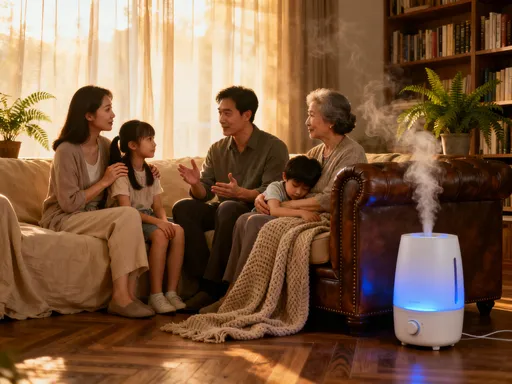
Then there was my teenager. You know how it goes—dinner, a quick update, and then he’s gone, headphones on, door closed. But one evening, after the humidifier had been running steadily all day, he stayed. He didn’t say much at first, just lingered, flipping through a magazine. Then he asked a question—about my day, about a project I’d mentioned weeks ago. We ended up talking about music, about school, about nothing and everything. No drama, no tension. Just connection. I don’t think it was the humidifier alone. But I do think it helped create the conditions for it. When the air is calm, so are we. When we’re not fighting dry skin or scratchy throats, we have more room to listen. More patience. More presence.
It’s not magic. It’s environment. And environment shapes behavior in ways we rarely acknowledge. We invest in soundproofing for better sleep, in lighting for better focus, but we often forget that the air itself carries emotional weight. When it’s balanced, it doesn’t demand attention. It lets us be ourselves—softer, slower, more open.
Tuning the Home Like a Conversation
After a few weeks, I started checking the app not just out of curiosity, but out of habit—like checking the weather before a walk. I’d glance at the humidity level in the morning, not just to see if the system was working, but to get a sense of how the house was feeling. And I began to notice patterns. On days when the humidity dipped below 40%, we were more likely to argue. On days when it stayed steady, conversations flowed easier. It wasn’t perfect correlation, but it was enough to make me pause.
So I started using it as a guide. No serious talks when the air is dry. Family check-ins when the app shows we’re in the sweet spot. I even started pairing it with small rituals—lighting a candle when the humidity is balanced, making tea when the system signals a shift. It sounds simple, maybe even a little silly. But it works. It turns the invisible into something we can respond to. Instead of reacting to tension after it builds, we can prevent it before it starts.
I remember one afternoon, my daughter came to me upset about a friendship issue. Normally, I might have tried to fix it right away. But I glanced at the app—36%. Dry. I took a breath and said, “Let’s go make hot chocolate. We can talk in a little while.” We sat together, warmed by the drink and the now-humid air, and when we did talk, it was calmer, more thoughtful. The problem didn’t disappear, but how we handled it did. That’s when I realized: the humidifier wasn’t just changing the air. It was changing how we showed up in it.
Small Tech, Big Emotional Returns
This isn’t just about humidity. It’s about intention. It’s about creating a home that supports not just our bodies, but our hearts. We spend so much time optimizing our schedules, our diets, our workouts—but how often do we think about the air we breathe at home? It’s easy to overlook, but it’s foundational. Poor air quality doesn’t just cause dry skin. It can lead to poor sleep. Poor sleep affects mood. Mood affects how we treat each other. It’s a chain reaction, and humidity is one of the first links.
The return on this small investment hasn’t been measured in data points or energy savings. It’s been measured in moments. In longer conversations. In fewer raised voices. In the way my partner now says, “The air feels nice today,” before he even says good morning. In the way my kids linger in the living room instead of retreating to their rooms. In the way I feel—lighter, calmer, more like myself.
I’m not saying a smart humidifier will fix every challenge in your home. Relationships take work. Communication takes effort. But sometimes, the biggest barriers aren’t emotional—they’re environmental. And when you remove one, even a small one, the rest becomes a little easier. This isn’t about perfection. It’s about making space for better moments. For patience. For presence. For the kind of quiet connection that doesn’t happen by accident—but can be nurtured, one breath at a time.
A Home That Breathes With You
I used to think smart homes were about control—about telling the lights when to turn on, the thermostat when to adjust, the speaker what to play. But this experience taught me something different. The best technology doesn’t command. It responds. It listens. It supports. The smart humidifier didn’t take over my home. It tuned into it. It learned our rhythms, our needs, our quiet moments of tension and peace. And in doing so, it helped us show up better—for each other, and for ourselves.
Now, when I walk into the living room and feel that soft, balanced air, I don’t just think about comfort. I think about connection. I think about the conversations that happen more easily, the laughter that comes more freely, the silence that feels restful instead of heavy. I think about how a home isn’t just a structure. It’s a living, breathing space—one that can either weigh us down or lift us up.
Technology, at its best, shouldn’t shout. It shouldn’t dazzle. It should whisper. It should hum quietly in the background, doing its work so we can do ours—loving, listening, living. The smart humidifier didn’t change my family. But it gave us the air we needed to be who we already are. Calmer. Kinder. More present. And sometimes, that’s the most powerful change of all.