Why Yoga and TCM Fixed My Stress When Nothing Else Did
Stress used to own my days—racing thoughts, tight shoulders, zero focus. I tried everything: deep breathing, walks, even cutting caffeine. Nothing stuck—until I blended yoga meditation with traditional Chinese medicine principles. This isn’t about quick fixes. It’s about rewiring how your body handles pressure. What I discovered wasn’t just relief—it was balance, energy, and a calmer mind that actually lasts. Let me walk you through how this deep, science-backed combo changed my nervous system for good.
The Breaking Point: When Stress Wins
For years, stress wasn’t just a feeling—it was a constant companion. Mornings began with a clenched jaw and a mind already replaying yesterday’s unresolved emails. By midday, the weight in my chest made it hard to concentrate. Evenings offered no relief, as sleep remained elusive, chased away by the same loop of worries. I wasn’t alone. Millions of adults, especially women balancing work, family, and personal well-being, face this silent erosion of energy and peace. The World Health Organization has labeled chronic stress a global health epidemic, linking it to increased risks of heart disease, digestive disorders, and weakened immunity.
I turned to common solutions. I downloaded meditation apps, took evening strolls, and eliminated coffee from my routine. Each helped, briefly. But the relief was fleeting, like turning down the volume on a loudspeaker without stopping the noise at its source. The problem wasn’t just the external demands—it was how my body had learned to respond. My nervous system stayed locked in 'fight or flight' mode, mistaking everyday pressures for life-threatening dangers. Cortisol, the stress hormone, remained elevated, disrupting sleep, digestion, and mood. I realized I needed more than symptom management. I needed a system that addressed the root—how my body stored and processed stress on a physiological and energetic level.
That’s when I began exploring holistic traditions. I had heard whispers of yoga’s power beyond flexibility and TCM’s ancient understanding of emotional balance. Skeptical but desperate, I committed to learning how these systems viewed stress—not as a mental glitch, but as a disruption in the body’s natural harmony. What I found wasn’t mystical or esoteric, but deeply logical and grounded in centuries of observation. This wasn’t about escaping reality, but about realigning with it.
Yoga Meditation Unpacked: More Than Just Stretching
Yoga meditation is often misunderstood as merely physical exercise or passive relaxation. In truth, it’s a comprehensive mind-body discipline that integrates breath control, mindful movement, and focused awareness. At its core, it’s designed to regulate the autonomic nervous system—the unconscious network that controls heart rate, digestion, and stress response. When practiced consistently, yoga meditation activates the parasympathetic nervous system, commonly known as the 'rest and digest' mode. This counters the overactive sympathetic system responsible for the stress response.
Scientific studies have shown that regular yoga practice reduces levels of cortisol and increases heart rate variability (HRV), a key marker of resilience. Higher HRV means the body can adapt more efficiently to stress and recover faster. Unlike temporary calming techniques, yoga doesn’t just mask anxiety—it retrains the nervous system over time. The combination of slow, rhythmic breathing (pranayama) and postures (asanas) sends signals to the brain that safety has returned, even in the midst of a busy day.
What makes yoga meditation particularly effective for chronic stress is its cumulative effect. A single session might bring calm, but it’s the daily repetition that rewires neural pathways. Over weeks and months, the brain begins to default to calm instead of reactivity. This isn’t about achieving perfection in poses or emptying the mind completely. It’s about showing up, breathing with intention, and creating space between stimulus and response. The practice becomes a sanctuary, a daily reminder that you are not your stress—you are the awareness behind it.
Traditional Chinese Medicine View on Stress: Energy in Flow
Traditional Chinese Medicine (TCM) offers a unique lens on emotional health, centered on the concept of Qi (pronounced 'chee'). Qi is the vital energy that flows through the body along pathways called meridians. When Qi moves freely, the body functions in balance. When it becomes blocked or stagnant, physical and emotional symptoms arise. In TCM, stress is not just a mental state—it’s a disruption in the smooth flow of Qi, particularly in the liver system.
The liver in TCM governs the smooth flow of Qi and emotions. It’s responsible for planning, decision-making, and managing frustration. When under prolonged stress, the liver Qi becomes stagnant, leading to irritability, mood swings, headaches, and a sensation of tightness in the chest or ribcage. This stagnation can also affect digestion, as the liver supports the spleen and stomach in processing food and emotions. Many women report bloating, acid reflux, or appetite changes during stressful periods—classic signs of liver Qi imbalance.
TCM doesn’t aim to suppress these symptoms but to restore movement. The goal is not to 'get rid of' stress but to help the body process it efficiently. Herbs like Bupleurum (Chai Hu) are traditionally used to soothe liver Qi stagnation. Acupuncture points along the liver and gallbladder meridians are stimulated to release tension. But beyond clinical treatment, TCM emphasizes daily habits—diet, movement, and emotional awareness—that keep energy flowing. This holistic view aligns perfectly with the modern understanding of stress as a systemic issue, not just a brain problem.
Where Yoga Meets TCM: A Natural Synergy
The integration of yoga meditation and TCM creates a powerful synergy, where physical practice supports energetic balance and vice versa. Both systems recognize that the body and mind are inseparable, and that emotional health is deeply tied to physical vitality. When yoga postures are practiced with awareness of meridian pathways, they become more than exercise—they become moving medicine.
Consider forward bends like Child’s Pose or Seated Forward Fold. In yoga, these postures are known for their calming effect on the nervous system. In TCM, they gently compress the abdomen, stimulating the liver and spleen meridians that run through the torso. This physical pressure helps release stagnant Qi, especially after long periods of sitting or emotional strain. Similarly, gentle twists activate the liver and gallbladder meridians, promoting detoxification and emotional release.
Breathwork is another key intersection. Diaphragmatic breathing, emphasized in yoga, naturally enhances Qi circulation. Deep belly breathing massages the internal organs, improving digestion and calming the mind. In TCM, this type of breath is said to anchor the Qi in the lower abdomen, or 'dantian,' creating a sense of groundedness. When combined with mindful movement, breath becomes a tool to direct energy, clear blockages, and restore equilibrium. The result is a practice that doesn’t just relax the body—it recalibrates the entire system.
My Daily 20-Minute Reset: Simple Practices That Work
After months of trial and error, I designed a simple 20-minute routine that blends yoga and TCM principles. It’s not elaborate, but it’s consistent—and that’s what matters. I do it every morning, but even on busy days, I adapt it to fit. The key is regularity, not duration.
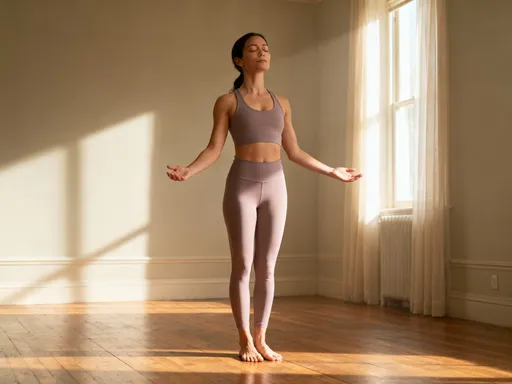
I begin with five minutes of breathwork. Sitting comfortably, I place one hand on my belly and breathe deeply into the lower abdomen. I inhale for four counts, hold for two, and exhale slowly for six. This extended exhale activates the vagus nerve, deepening the relaxation response. As I breathe, I visualize Qi gathering in my lower dantian, creating a warm, stable center. This practice alone shifts my entire day from reactive to intentional.
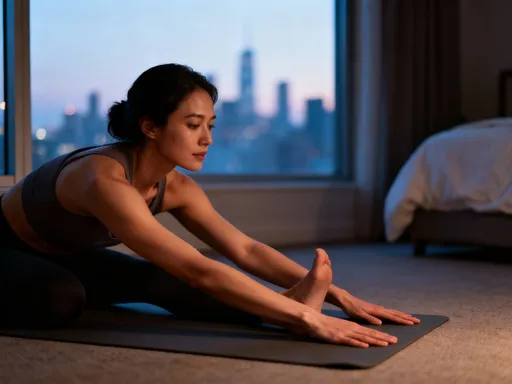
Next, I spend ten minutes on gentle stretches. I start with Cat-Cow to mobilize the spine and encourage Qi flow along the back. Then, I move into a series of seated forward folds and gentle twists, focusing on the sides of the body where the liver and gallbladder meridians run. I don’t push into discomfort—I move with awareness, allowing each stretch to release tension rather than create it. Sometimes, I incorporate acupressure by gently pressing the point between my thumb and index finger (LI4), known in TCM to relieve stress and headaches.
I close with five minutes of seated meditation. I light a candle or play soft singing bowl sounds, creating a sensory anchor. I focus on the breath and repeat a simple phrase: 'I am calm. I am centered.' This isn’t about stopping thoughts, but about returning, again and again, to a place of stillness. Over time, this practice has become my anchor, a daily recommitment to balance.
Science Behind the Blend: What Research Says
The growing body of research supports the effectiveness of both yoga and TCM-informed practices for stress reduction. A 2020 meta-analysis published in the Journal of Clinical Psychology reviewed over 30 studies and found that yoga significantly reduces perceived stress and anxiety levels. Participants who practiced yoga two to three times per week showed measurable decreases in cortisol and improvements in mood and sleep quality.
Heart rate variability (HRV) has emerged as a reliable biomarker of stress resilience. Studies show that regular yoga practitioners have higher HRV, indicating a more adaptable and responsive nervous system. This means they recover faster from stressors and maintain emotional stability more easily. The combination of breath regulation and mindful movement appears to train the body to shift out of survival mode and into balance.
TCM practices are also gaining scientific validation. Research on acupressure, for example, has shown that stimulating specific points like Yintang (between the eyebrows) or HT7 (on the wrist) can reduce anxiety and improve sleep. A 2018 randomized controlled trial found that participants who received acupressure alongside meditation reported significantly lower stress levels compared to the control group. While more research is needed, the evidence suggests that supporting Qi flow through physical stimulation enhances the benefits of mindfulness practices.
What’s clear is that results are not immediate. They come from consistent, patient practice. There’s no magic pill, but there is a proven path. The integration of yoga and TCM offers a natural, accessible way to build resilience from the inside out. It’s not about adding more to your plate, but about transforming how you engage with everything already on it.
Building a Sustainable Habit: Mindset Over Perfection
One of the biggest obstacles to lasting change is the expectation of perfection. Many women I’ve spoken to start strong but give up when they miss a day or don’t feel instant results. The truth is, sustainability comes not from flawless execution, but from a compassionate mindset. Progress is not linear. Some days, your energy will be low. Other days, obligations will interfere. That’s normal. The practice isn’t about never missing—it’s about returning.
Listening to your body is essential. In TCM, health is not static—it shifts with seasons, menstrual cycles, and life phases. A practice that works in summer may need adjustment in winter. A vigorous flow might suit a high-energy day, while a restorative sequence is better when fatigued. Flexibility in practice fosters long-term adherence. Instead of rigid rules, think of your routine as a conversation with your body. What does it need today? Movement? Stillness? Gentle touch?
Another key is reframing your intention. Don’t practice to 'fix' yourself or eliminate stress entirely—that’s unrealistic. Practice to build resilience, to create moments of calm, to deepen self-awareness. Celebrate small wins: a deeper breath, a moment of presence, a headache that didn’t come. These are signs of progress. Over time, these moments accumulate into lasting change. Self-compassion is not indulgence—it’s the foundation of healing.
Conclusion
True stress release isn’t about escape—it’s about cultivating inner resilience. Blending yoga meditation with TCM wisdom offers a proven, natural path to lasting calm. It’s not instant, but it’s real. When you work with your body’s rhythms, not against them, peace becomes a practice, not a promise. This approach doesn’t erase life’s pressures, but it transforms how you carry them. You begin to respond rather than react, to breathe instead of brace. The tightness in your shoulders eases. Your thoughts slow. Your energy returns. This isn’t about becoming someone else—it’s about returning to yourself, one breath, one movement, one moment at a time. And for anyone who’s ever felt overwhelmed, that’s not just relief. It’s renewal.